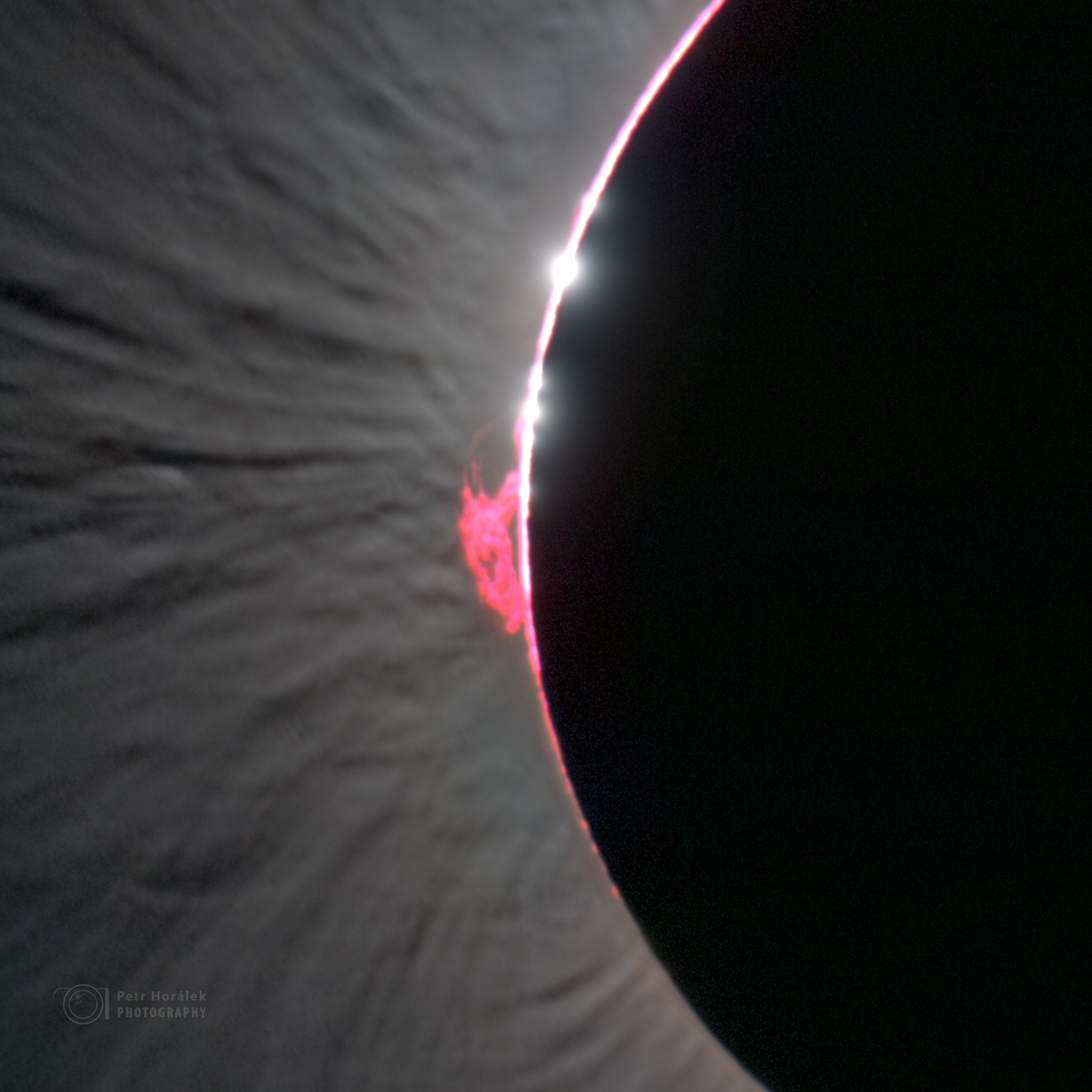
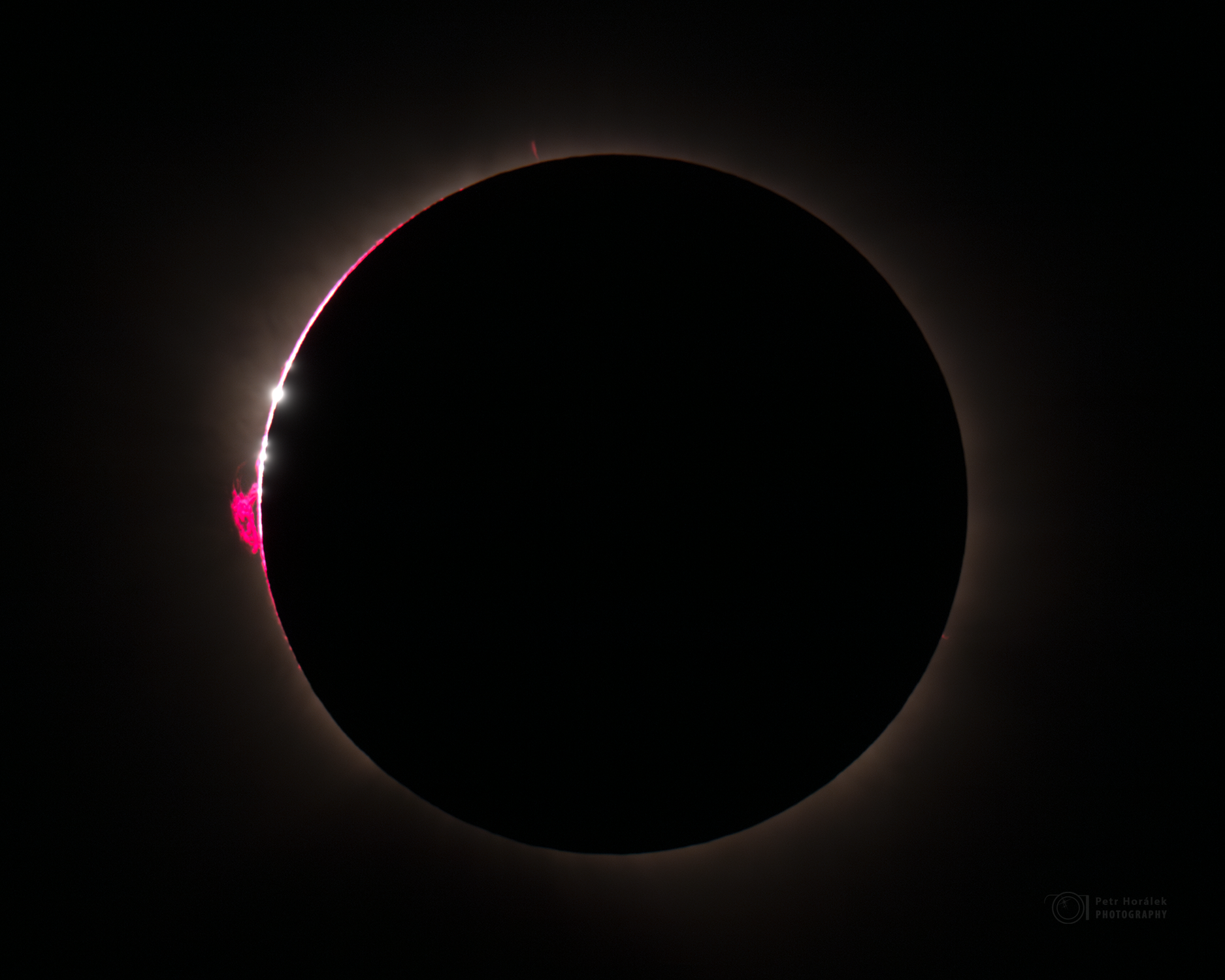
On 12 August 2026, truly beautiful solar eclipse occured over north pole, visible as total especially from the Spain. I was lucky to observe the eclipse nearby the Tordueles (a small rural hamlet in the province of Burgos), where the totality took about 1 minute and 46 seconds, just less then 1 hour before the sunset. It was truly memorable in many ways and here are some images I took during this special event.
The family eclipse moment
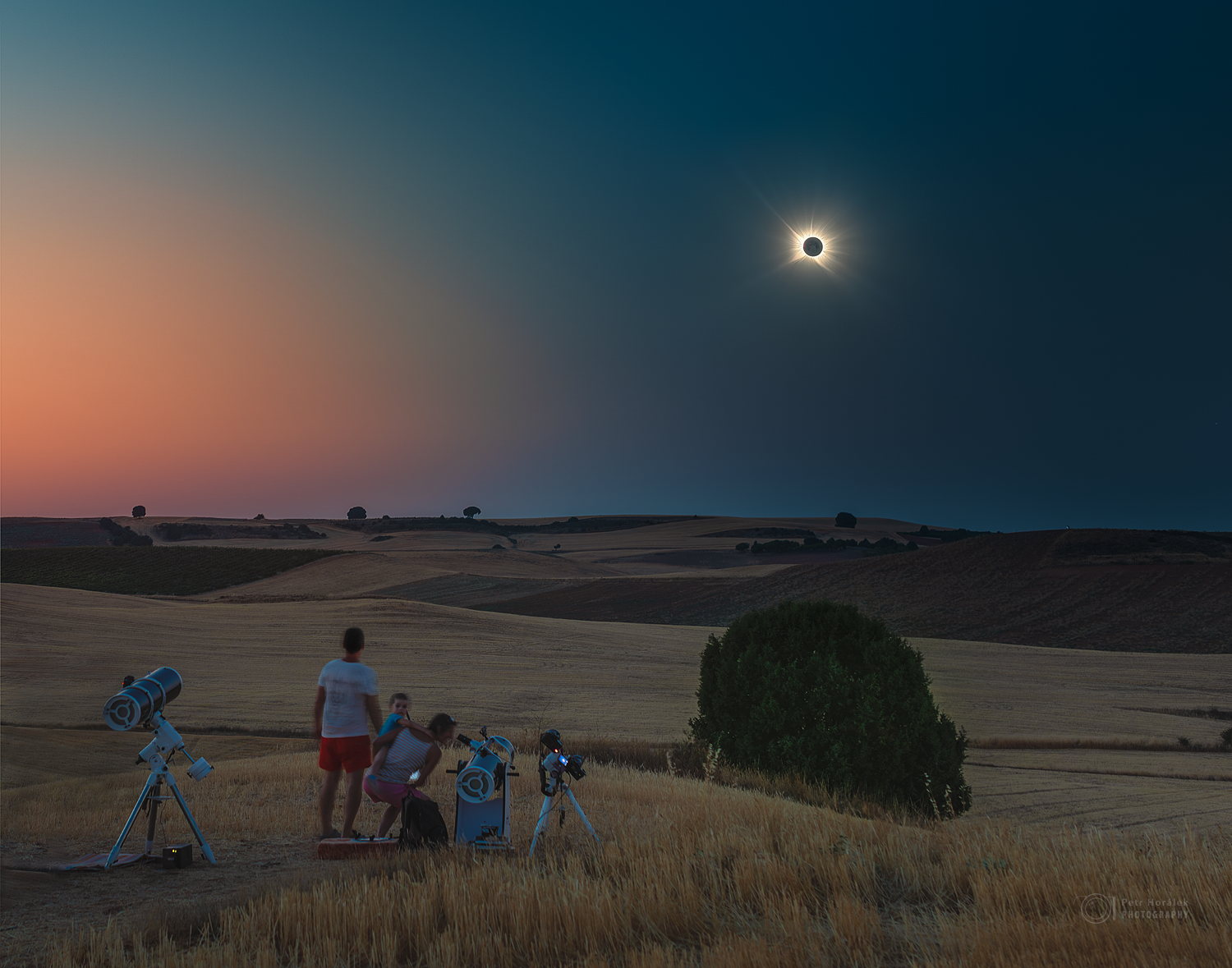
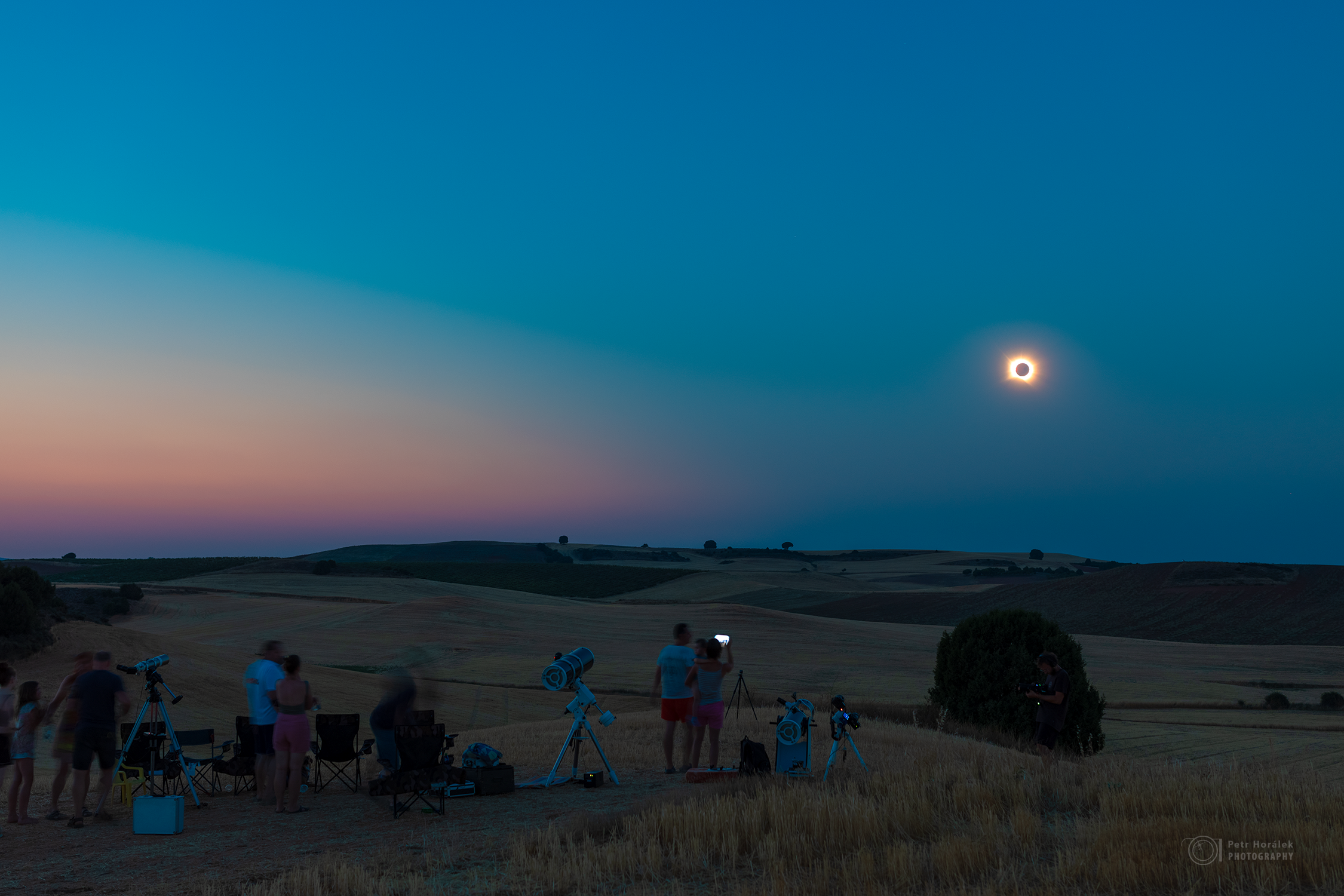
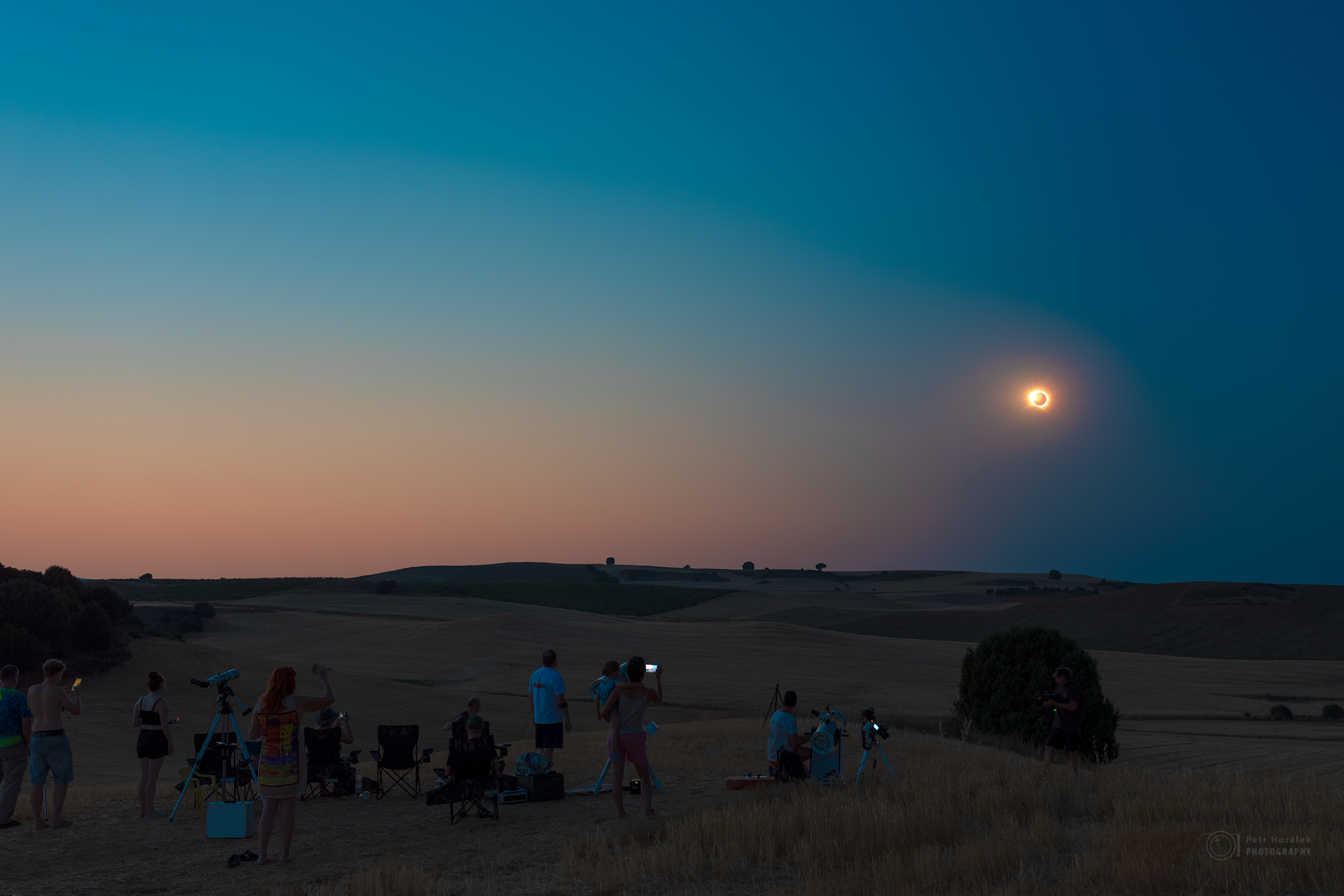
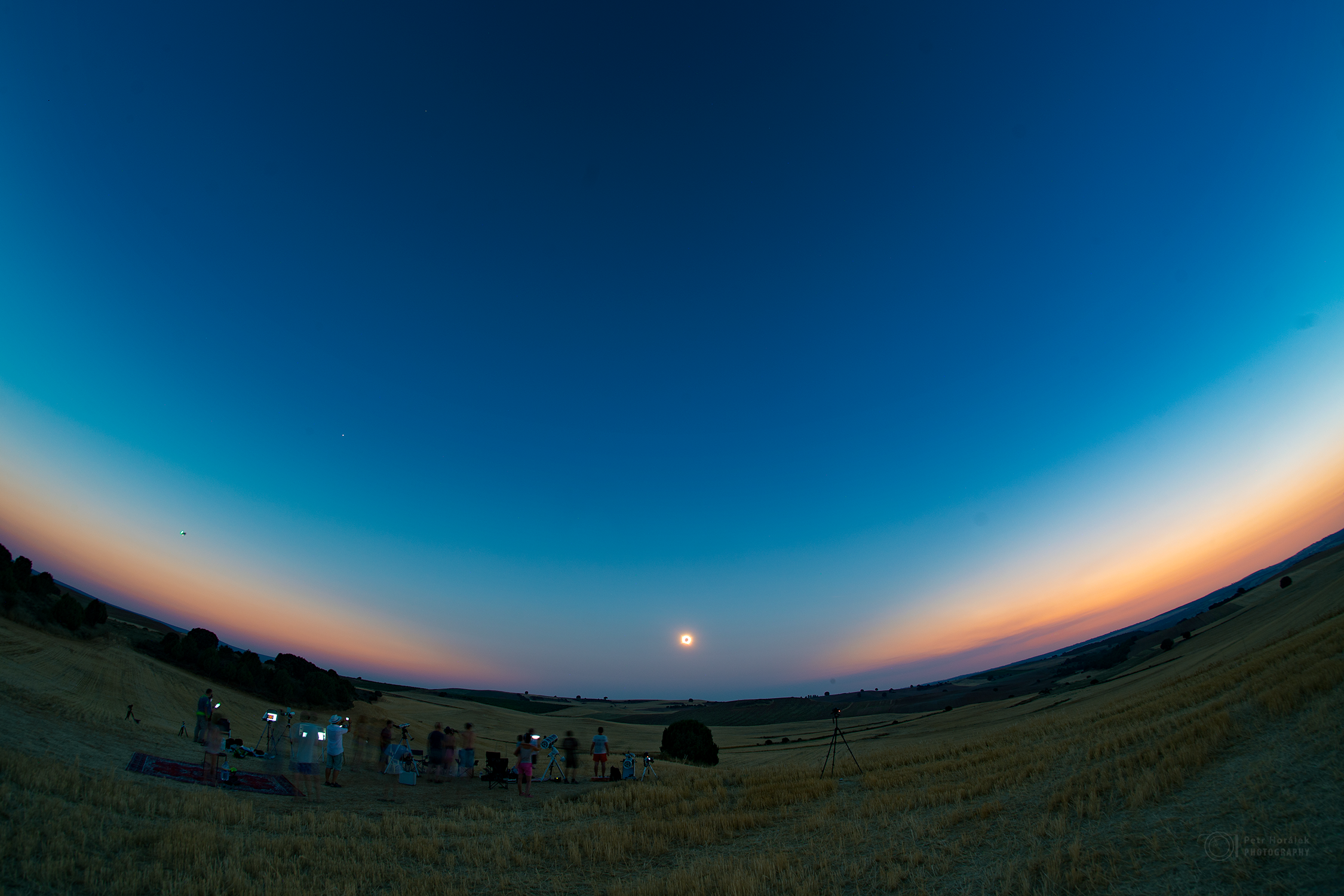
It was truly a special total one. Many people enjoyed that. And many kids. I deeply hope even the smallest ones will have a wonderful memory for the rest of their lives. The image above shows that breathtaking, albeit fleeting, moment when the eclipse had just begun—when the dark lunar shadow enveloped the sky, and the captivating solar corona revealed itself. While I stand in the picture, completely transfixed by the spectacle, my family is admiring the view through a telescope. It was truly an extraordinary experience! Used Canon Ra, Sigma 35mm, f2.8, ISO 100, various exposures. I would like to thank Tamara Stankova and Josef Kujal for their help with the data acquisition for this image.
Total Eclipse 2026 Sunset
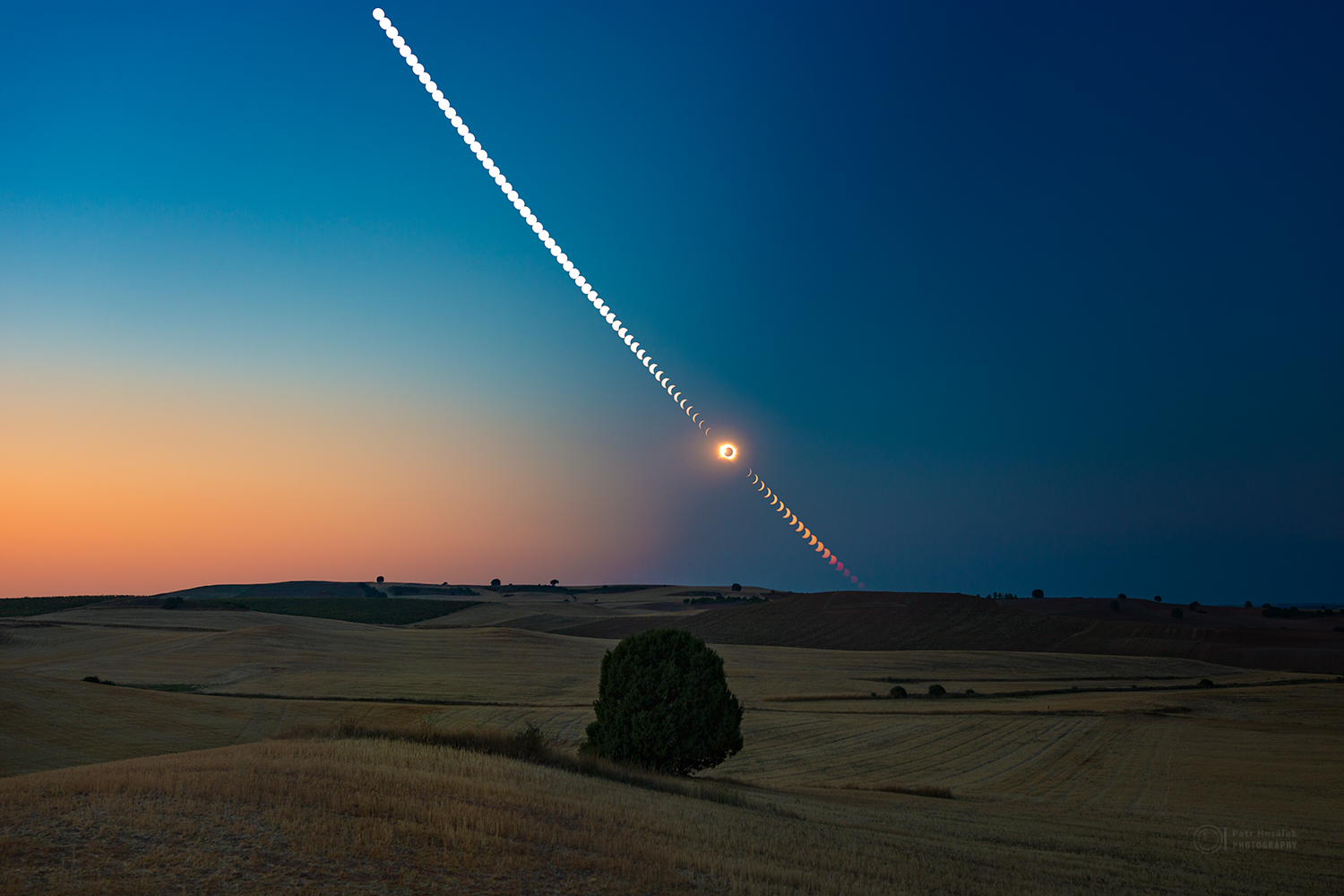
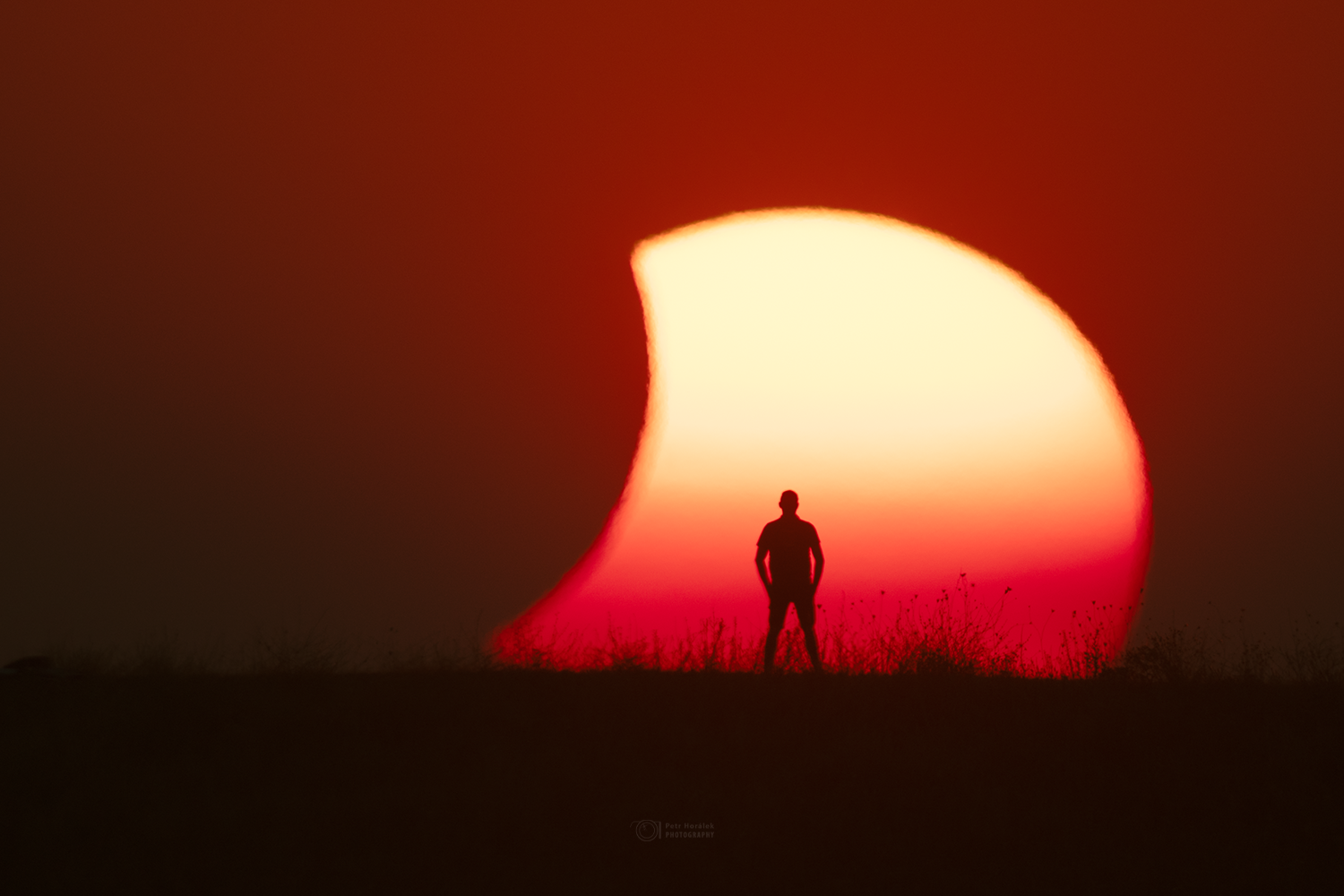
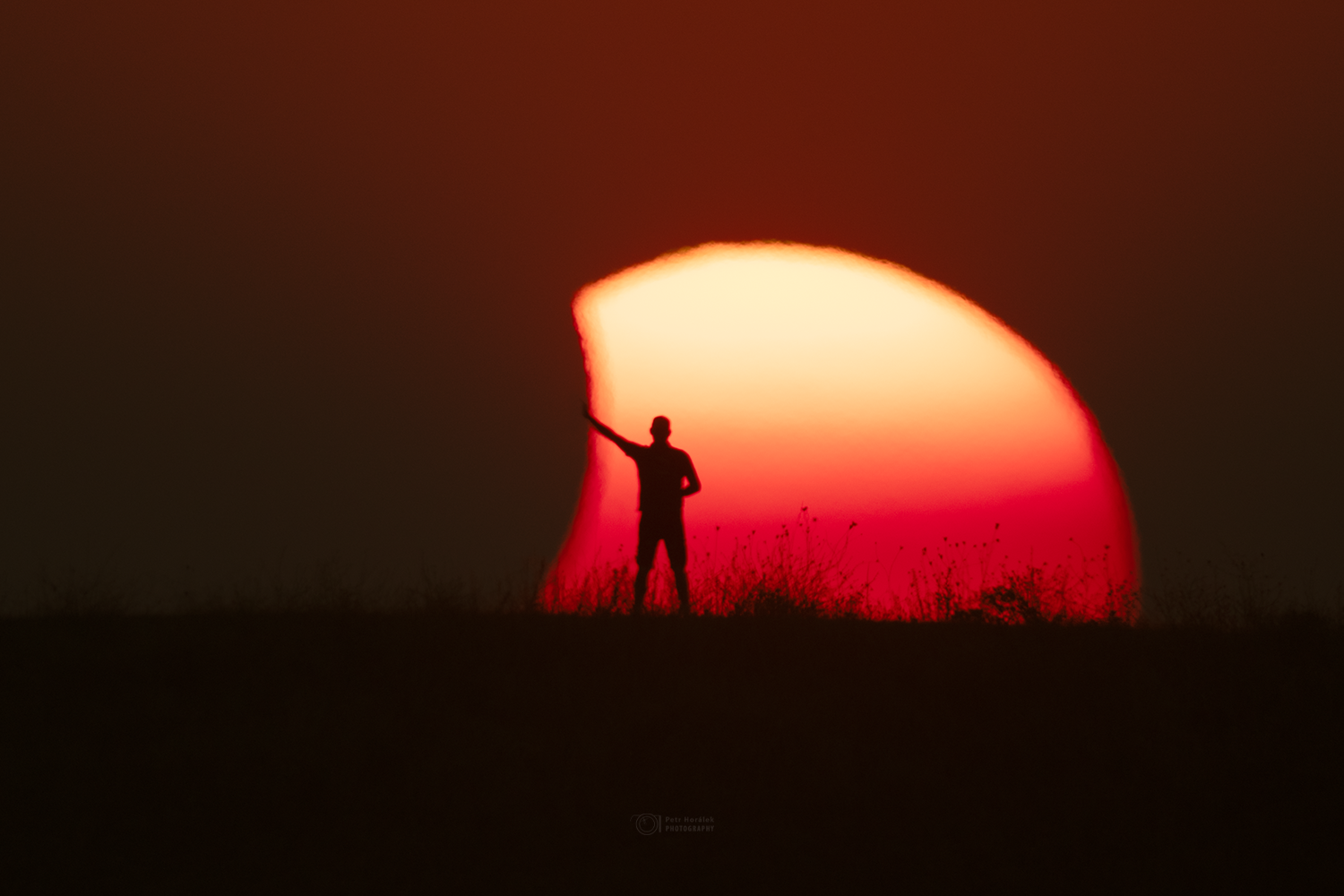
In the about 3-hour-long sequence, the Sun is going to set when the Moon crosses its path in the sky. Leading to the total solar eclipse in the sky, featured by the foreground image of the exact moment when the total solar eclipse over Tordueles, Spain, starts. While the left part of the sky is still bright, out of the lunar shadow, the right one is “swallowed” by it. After the totality, partially eclipsed Sun continues to the horizon, reddening due to dust in the Earth’s atmosphere. Very prominent is also the orange solar corona, caused by reddening of the light traveling through the ash of forest fires in the central Spain. Used Canon 6D, Sigma 28mm, f3.5 and 1/3200s (partial eclipse, filtered by Baader Astro Solar), f2.5 and 1s (total eclipse), ISO 100, tripod.
Full credit: Petr Horálek (Institute of Physics in Opava); Acknowledgement: Martin Smetana and Josef Kujal.

Total Eclipse 2026 Sunset – Vertical Crop
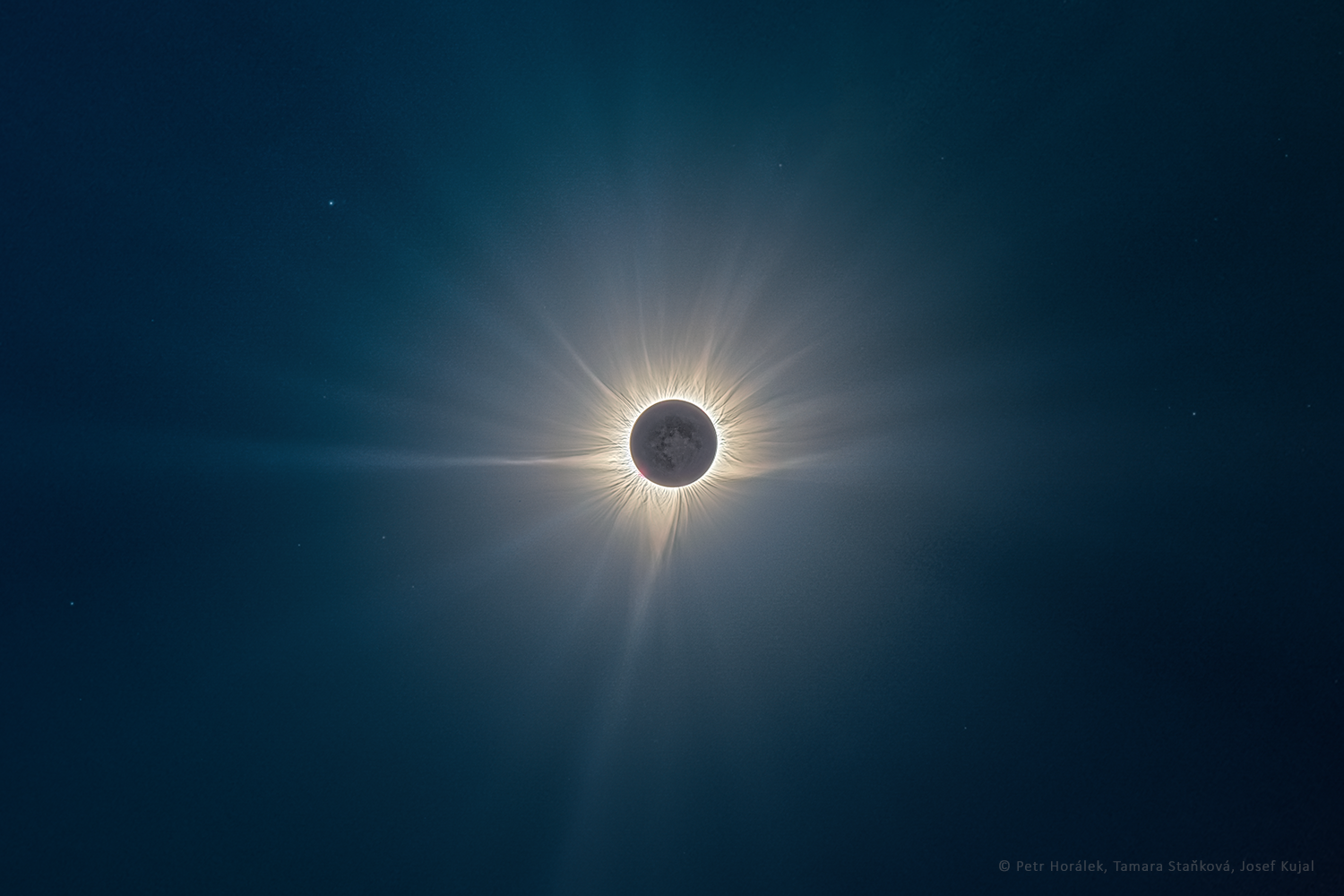
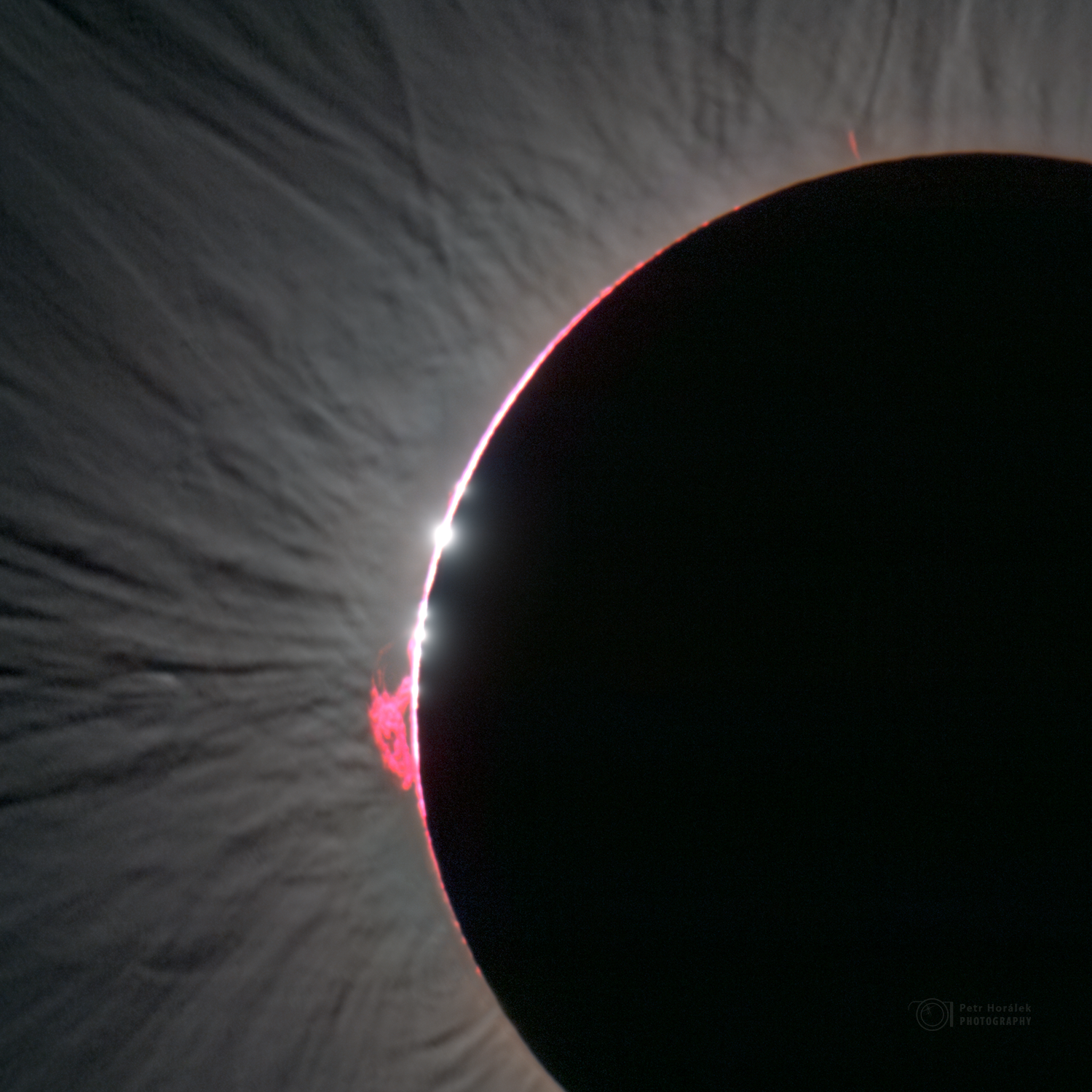
Here comes a sophisticated, mathematically processed image of the solar eclipse of August 12, 2026, which reveals the delicate structures of the solar corona extending far from the surface of the obscured Sun. The image was created by processing hundreds of gigabytes of data that my colleagues Tamara Staňková, Pepa Kujal, and I captured using four different cameras during the 1-minute-46-second total solar eclipse near the village of Tordueles, Spain. Big problem for observation was the dust from forest fires and also Saharian sand in the air, which didn’t allow to reveal more structures this time. For this image, I used data from Nikon Z6III (200mm, f2.8, exposures from 1/125s to 1s), Canon 6D (500mm, f5.6, exposures from 1/200 to 1/60s), Newton 250/1250 (used only short exposures 1/500s), and Canon R (400mm, f8, used only 3s exposures).
Wide Angle Corona
Full credit: Petr Horálek (Institute of Physics in Opava), Tamara Staňková, and Josef Kujal.
More snapsots
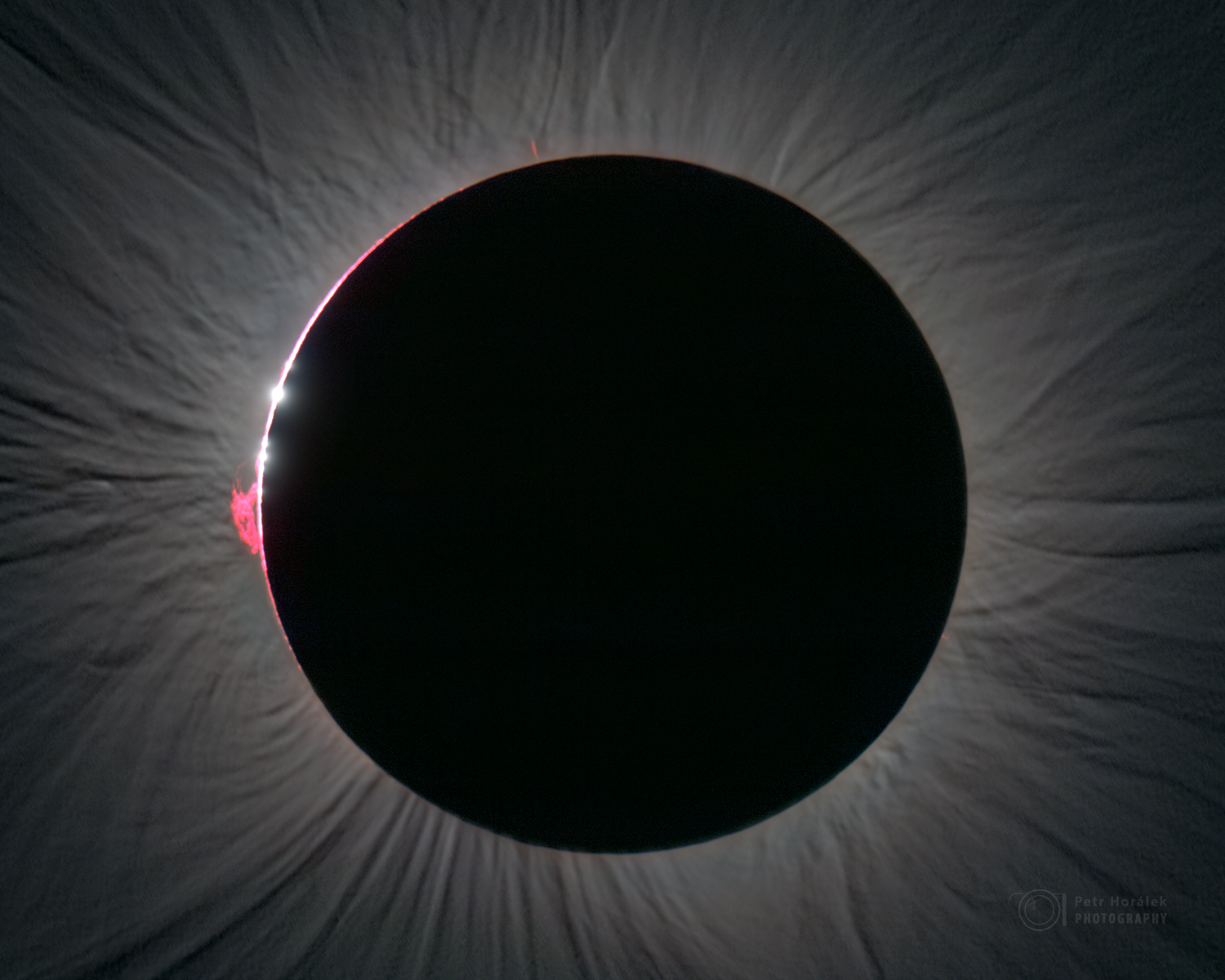


Telescopic video of the totaily
… and a wide-angle live video

